


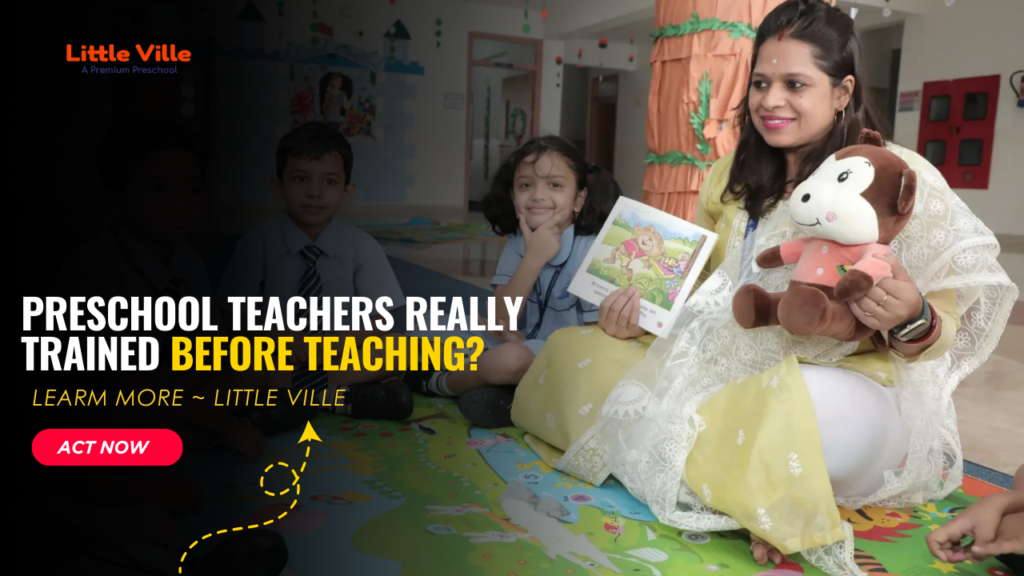
Preschool teachers are trained in child behavior, classroom safety, play-based learning, and communication before they enter classrooms. This training ensures children learn in a safe, supportive environment while meeting early childhood development needs.
Early education is not just about teaching letters and numbers. Parents worry about who handles their child, how they are treated, and whether teachers are truly prepared. This is why teacher training plays a critical role in every quality preschool.
Let’s break this down clearly and simply.
Why Teacher Training Matters in Preschools
Children between ages 2 and 6 are at a sensitive stage of growth. They are learning how to:
- Communicate
- Share emotions
- Follow routines
- Trust adults outside home
An untrained teacher can unintentionally cause stress, fear, or confusion. A trained teacher, on the other hand, creates:
- Emotional safety
- Structured learning
- Positive social behavior
That’s why good preschools never allow teachers into classrooms without proper preparation.
Step 1: Understanding Child Development
Before teaching begins, preschool teachers are trained to understand how young children grow.
They learn:
- How toddlers think and react
- Why children cry, resist, or get distracted
- Age-appropriate expectations
This training helps teachers avoid:
- Forcing learning too early
- Comparing children
- Using harsh discipline
Instead, teachers learn patience, observation, and guidance.
Step 2: Training in Play-Based Learning
Modern preschools do not rely on rote learning. Teachers are trained in play-based methods, where children learn through activities.
Teachers are taught:
- How games improve thinking
- How stories help language development
- How music supports emotional growth
- How movement improves motor skills
This ensures learning feels natural and joyful, not stressful.
Step 3: Classroom Safety and Child Protection
Safety is one of the biggest concerns for parents — and rightly so.
Before entering classrooms, teachers receive training on:
- Childproof classroom practices
- Safe use of toys and materials
- Emergency response basics
- Supervision rules during playtime
- Hygiene and cleanliness standards
This training reduces accidents and builds parent trust.
Step 4: Communication Skills Training
Teaching young children requires calm and clear communication.
Teachers are trained on:
- Speaking gently and clearly
- Listening to children patiently
- Handling emotional outbursts
- Encouraging shy or quiet children
They also learn how to:
- Talk to parents
- Share child progress
- Address concerns respectfully
Good communication builds a strong preschool-parent relationship.
Step 5: Daily Classroom Routine Training
Preschool teachers are trained to manage daily schedules smoothly.
They learn how to:
- Start the day calmly
- Transition between activities
- Handle snack and rest times
- Maintain discipline without fear
- Keep children engaged throughout the day
This prevents chaos and creates a predictable, secure environment for children.
Step 6: Observation and Assessment Training
Teachers are trained to observe, not judge.
They learn:
- How to track a child’s progress
- Identify learning difficulties early
- Understand emotional or behavioral changes
- Support different learning speeds
This helps teachers support every child individually.
Step 7: Ongoing Training and Feedback
Teacher training does not stop once classes begin.
Most structured preschools provide:
- Regular refresher training
- Curriculum updates
- Classroom observation feedback
- Skill improvement sessions
This ensures teachers grow along with children’s needs.
Teacher Training vs Untrained Teaching (Quick Comparison)
| Aspect | Trained Teachers | Untrained Teachers |
| Child safety | High priority | Often overlooked |
| Learning style | Play-based & structured | Random or forced |
| Emotional handling | Calm & patient | Reactive |
| Parent communication | Clear & supportive | Inconsistent |
| Classroom control | Positive discipline | Strict or chaotic |
Why Parents Should Ask About Teacher Training
Before choosing a preschool Franchise, parents should ask:
- How are teachers trained?
- Is training ongoing?
- How is classroom quality monitored?
Preschools that are transparent about training usually maintain higher standards.
Final Thoughts: Why Training Makes the Real Difference
A preschool is only as good as the teachers inside its classrooms. Proper training ensures children feel safe, happy, and confident while learning essential life skills.
Brands like Little Ville focus strongly on structured teacher training, curriculum understanding, and classroom readiness before educators interact with children. This approach helps create a nurturing learning environment where both children and parents feel secure and supported.
Choosing a preschool that invests in teacher preparation is one of the best decisions a parent or franchise owner can make.
1. Are preschool teachers trained before entering classrooms?
Yes. Reputed preschools train teachers before they enter classrooms. This training covers child behavior, classroom safety, play-based learning, and daily routine handling to ensure children learn in a safe and supportive environment.
2. What type of training do preschool teachers receive?
Preschool teachers receive training in child development, activity-based teaching methods, safety procedures, classroom management, and parent communication. This helps them handle young children with care, patience, and confidence.
3. Why is teacher training important in preschools?
Teacher training is important because young children need emotional safety and structured guidance. Trained teachers understand how children learn, behave, and express emotions, which improves learning outcomes and reduces stress for children.
4. How does play-based training help preschool teachers?
Play-based training helps teachers turn activities, games, and stories into learning experiences. This method keeps children engaged, improves social skills, and supports natural learning without pressure or fear.
5. Do preschools provide ongoing training for teachers?
Yes. Many structured preschools provide ongoing training through workshops, classroom observations, and refresher programs. This helps teachers improve skills and stay aligned with modern early learning practices.
6. How can parents check if a preschool trains its teachers properly?
Parents can ask about teacher induction programs, safety training, and ongoing development sessions. Preschools that clearly explain their training process usually follow higher education and safety standards.